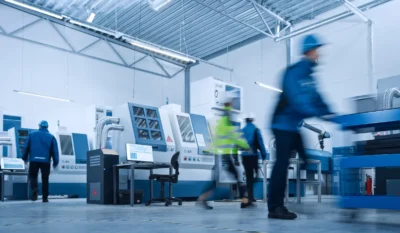

Unplanned downtime remains a multi-million-dollar problem for manufacturers, even in plants that appear well-maintained.
Manufacturers lose up to 800 hours of production annually to unplanned downtime, costing industrial companies roughly $50 billion a year in lost output and idle time, according to Forbes.
When a production line stops, leaders often point to equipment failures, operator errors, or mechanical breakdowns. Those issues still matter, but they are no longer the whole story.
Today, many manufacturing downtime causes originate in IT systems, integrations, and unmonitored digital infrastructure. ERP and MES platforms schedule work. Networks synchronize machines. Sensors, controllers, and applications drive workflows. When these systems fail, production downtime follows, even if every machine on the floor is mechanically sound.
Understanding the actual root cause of downtime is the first step toward preventing costly disruptions. Manufacturing downtime is no longer random. It is systemic, measurable, and increasingly preventable.
Key takeaways:
- Reframe downtime as a systems risk spanning IT, OT, and integrations, not just equipment failures on the production line.
- Instrument your environment with real-time monitoring to surface IT failures before they halt production schedules.
- Standardize maintenance across machines and infrastructure to prevent repeat outages caused by patching and configuration drift.
- Eliminate blind spots by correlating network, application, and OT signals to identify true root causes faster.
- Extend your team with manufacturing-focused managed IT to stabilize uptime without increasing headcount.
The traditional view of downtime — and why it’s outdated
The assumption: “Equipment is the biggest downtime risk”
Historically, this assumption was accurate. Mechanical failures, worn components, and physical breakdowns accounted for most manufacturing downtime. Plants invested heavily in preventive maintenance, routine maintenance, and tighter maintenance schedules to extend equipment lifespan and reduce machine downtime.
That work paid off. Many manufacturers significantly reduced purely mechanical stoppages. Yet downtime persists, even as equipment reliability improves. That disconnect signals a shift in where production risk actually lives.
For more than 90% of mid-sized and large organizations, a single hour of downtime now costs over $300,000, underscoring why downtime has become a financial risk, not just a maintenance issue.
Modern manufacturing relies on IT at every stage
Today’s manufacturing process depends on digital systems at every point in the production cycle:
- ERP systems trigger jobs and manage production schedules
- MES platforms direct workflows and quality checks
- Sensors and IoT devices report conditions in real time
- Networks synchronize machines, controllers, and applications
If IT stalls, production stalls. A healthy production line cannot run without data movement.
The shift: Downtime is now multi-dimensional
Manufacturing downtime has evolved through distinct layers:
Mechanical → Digital → Integrated → Cyber
Each layer introduces new failure points. A single issue in a single layer can cascade into a complete shutdown. Treating downtime as purely mechanical leaves these risks unaddressed and allows repeat disruptions to persist.
The real culprits behind downtime (That most leaders overlook)
1. Network instability and bottlenecks
Slow or overloaded networks disrupt machine communication, PLC updates, and ERP syncing. Common signs include lagging barcode scanners, frozen MES screens, and machines failing mid-job.
Aging switches, poor segmentation, unmanaged traffic, or power instability often cause these disruptions. They create machine downtime without any mechanical fault, yet they rarely appear in traditional maintenance logs.
2. Poor patch management and outdated firmware
Unpatched systems crash unexpectedly. Outdated firmware causes integration failures between machines and control systems. These issues frequently surface during startup or peak production, triggering unplanned downtime.
They also increase cybersecurity exposure. Vulnerabilities turn minor issues into complete production outages when ransomware or malware enters the environment.
3. ERP and MES system failures or latency
When ERP or MES platforms falter, production cannot move. Operators lose visibility into jobs, materials, and quality checks. Even short delays create production downtime that ripples across shifts.
Standard root cause drivers include database overload, unsupported versions, poorly tested updates, and fragile integrations. Internal IT teams often lack deep expertise in ERP infrastructure, leaving these systems vulnerable.
4. IT/OT convergence without proper planning
OT devices now rely on IT networks, identity systems, and remote access tools. A misconfigured VLAN or firewall rule can shut down an entire production line.
When IT teams lack OT experience, well-intentioned changes create outages. When OT teams bypass IT controls, security and stability suffer. Without a unified strategy, convergence increases downtime instead of reducing it.
5. Lack of 24/7 monitoring and alerting
Most downtime events begin unnoticed. A server fills overnight. A switch overheats on the weekend. A backup fails for weeks.
Without real-time monitoring and actionable dashboards, teams discover problems only after shutdowns occur. This results in reactive maintenance, delays recovery, and increases downtime.
In Uptime Institute’s 2024 global survey, 54% of organizations said their most recent serious outage cost more than $100,000, with 16% exceeding $1 million, often due to delayed detection.
6. Third-party vendor integrations failing
Integrations create efficiency and risk. Machine software updates break workflows. Vendor remote access goes unmonitored. APIs fail under load. ERP, MES, and WMS dependencies collapse like a domino effect.
Each failure adds another source of lost production, especially when responsibility for the integration is unclear.
7. Cybersecurity incidents (not always “attacks”)
Not all cyber downtime comes from external attacks. Compromised credentials cause lockouts. Malware slows networks. Unauthorized access modifies settings.
Many plants misclassify these incidents as generic network issues, masking the root cause and enabling repeat shutdowns.
The FBI reports that ransomware remained the most pervasive threat to U.S. critical infrastructure in 2024, with complaints rising 9% year over year, frequently resulting in operational shutdowns.
8. Insufficient redundancy or failover
Single points of failure remain common. One domain controller. One critical switch. One internet line. One UPS supports multiple systems.
When these fail, everything goes down. Equipment downtime escalates into full production shutdowns, multiplying downtime costs.
What manufacturers actually need to prevent downtime
1. Real-time observability across IT and OT
Manufacturers need visibility into networks, servers, firewalls, PLC connections, and ERP or MES performance. Unified dashboards surface issues before they disrupt workflows and production schedules.
Tracking the right real-time metrics, including OEE impact and system latency, links technical signals to production risk. This reduces guesswork during changeovers and supports continuous improvement instead of reactive firefighting.
2. Proactive maintenance, not reactive firefighting
Patch management, firmware updates, vulnerability scans, and capacity planning must be treated as core maintenance activities. Predictive maintenance and predictive analytics should apply to digital assets, not just machines.
Strong maintenance strategies blend preventive maintenance with automation to catch issues early and avoid malfunctions during critical runs. Integrating digital tasks into the maintenance program reduces unplanned downtime and limits last-minute fixes, which increase downtime costs and hours.
3. A unified IT/OT strategy
Clear ownership, shared standards, and coordinated change control prevent accidental conflicts. IT and OT must operate as one reliability system.
Standard operating procedures for access, updates, and incident response reduce inefficiencies and human error during startups and changeovers. A unified strategy also improves forecasting by making system risks visible across teams.
4. Redundancy across mission-critical systems
Failover, backups, secondary connections, and cloud resiliency reduce the impact of outages. Redundancy turns potential shutdowns into contained disruptions.
This approach protects against power outages, network failures, and supply chain disruptions. It also supports inventory management when raw materials or spare parts are in short supply.
5. A structured incident root cause process
Every significant downtime event requires root cause analysis. Fixes without analysis guarantee repeat failures.
When incidents are logged consistently in a CMMS, including in the work order and asset management contexts, patterns in common causes emerge. This loop improves maintenance management decisions and reduces lost revenue over time.
NIST’s 2025 Manufacturing Cybersecurity Profile emphasizes structured incident analysis and supply chain risk management as core requirements for reducing operational disruption.
Why a managed it partner matters for downtime prevention
Internal teams can’t do 24/7 monitoring
Downtime does not follow business hours. Failures and attackers operate continuously.
Without coverage, minor issues escalate overnight into shutdowns that disrupt production schedules and increase hours of downtime. External monitoring closes this gap and reduces avoidable production downtime.
Deloitte’s 2024 manufacturing outlook cites persistent labor shortages and ongoing supply chain disruptions as key factors limiting manufacturers’ ability to respond quickly to downtime events.
MSPs bring specialist skills that factories rarely have
Network engineers, cybersecurity analysts, ERP infrastructure specialists, and OT-aware technicians are difficult to staff internally.
Managed providers apply these skills to common causes of downtime tied to integrations, automation platforms, and complex environments without adding headcount.
MSPs eliminate single points of human failure
No single employee holds all system knowledge.
Documentation, runbooks, and shared responsibility reduce risk tied to human error and support more consistent maintenance strategies across shifts.
MSPs correlate issues across systems
By monitoring all layers, MSPs identify root causes faster.
Cross-system correlation reduces troubleshooting time, improves OEE outcomes, and prevents teams from fixing symptoms instead of causes.
MSPs focus on proactive work internal teams never have time for
Patching, scanning, upgrades, and optimization prevent downtime but often get deferred.
Consistent execution reduces inefficiencies and lowers the long-term cost of downtime.
MSPs reduce downtime dramatically
Stabilized environments experience fewer disruptions and shutdowns and improved uptime.
Aligned monitoring, maintenance management, and response lead to measurable reductions in lost production and lost revenue.
Why Keystone is the partner manufacturers trust
Deep expertise in manufacturing IT systems
Keystone understands ERP and MES dependencies, IT/OT convergence, industrial cybersecurity, and plant-grade network architecture.
This expertise helps stabilize automation platforms and reduce downtime tied to integration failures and system malfunctions.
Dedicated 24/7 monitoring and rapid response
Issues are addressed before they escalate into downtime events.
Continuous monitoring protects planned downtime windows and keeps production running through the night, weekends, and peak demand periods.
Proven ability to reduce downtime in real-world plants
Keystone stabilizes integrations, redesigns networks, closes security gaps, and improves patching cadence.
These actions reduce downtime hours from IT failures rather than equipment breakdowns.
A co-managed model that enhances, not replaces, internal teams
Your team retains control. Keystone handles the heavy lift.
This model integrates with CMMS workflows and supports long-term continuous improvement without disrupting internal ownership.
Final thoughts: Downtime isn’t random — it’s preventable
Most manufacturing downtime is no longer mechanical in nature. It is driven by hidden IT failures, integrations, and unmonitored systems. Manufacturers who address these root causes outperform competitors in uptime, operational efficiency, and profitability.
The right partner provides visibility, stability, and confidence.
If downtime has become unpredictable, Keystone can help you uncover the real causes and build a stronger, more resilient environment.
FAQs
What are the most common manufacturing downtime causes today?
Manufacturing downtime is now primarily IT-related, driven by network outages, unpatched systems, and ERP or MES failures. These issues often disrupt production, even when the equipment is operating.
How do IT systems cause manufacturing downtime?
IT systems cause downtime when integrations fail, networks lag, or updates disrupt production workflows. These failures frequently appear during startups, changeovers, or peak production periods.
How does co-managed IT reduce the causes of manufacturing downtime?
Co-managed IT reduces manufacturing downtime by providing 24/7 monitoring, cybersecurity protection, and faster root-cause analysis. Internal teams retain control while shared responsibility improves uptime and resilience.